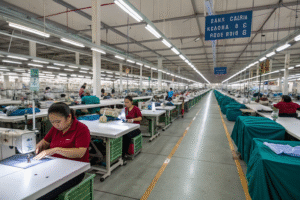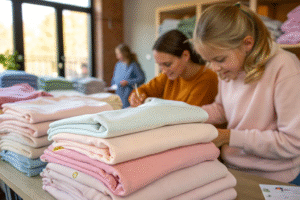

As a business owner sourcing children’s clothing, you are always looking for ways to balance quality, cost, and speed. Traditional manufacturing models often involve multiple suppliers—one for fabrics, another for dyeing, and yet another for sewing—which can cause delays, miscommunication, and inconsistent quality.
The simple answer is: Choosing vertical manufacturing for kidswear allows you to control the entire production process under one roof, reducing lead times, improving quality consistency, and ultimately increasing profitability.
This model is especially powerful for the mid-to-high-end children’s fashion market where product safety, style precision, and delivery deadlines are critical. Let’s explore why vertical manufacturing is the smart choice.
Greater Quality Control in Every Stage
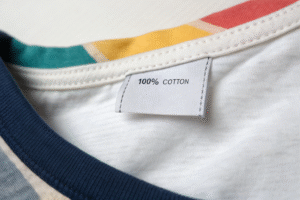
In children’s clothing, quality is not negotiable. Parents expect garments to be safe, durable, and comfortable. A vertical manufacturing setup ensures that every stage—from fabric sourcing to final packing—follows strict internal quality checks.

How does vertical manufacturing improve consistency?
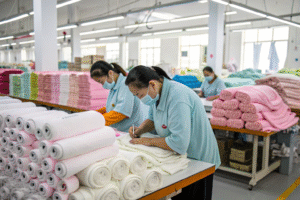
When a single company manages weaving, dyeing, and sewing, it can set uniform quality standards across all departments. This prevents mismatches in fabric weight, stitching durability, or color tones. According to Textile World, vertical mills achieve up to 20% fewer product defects compared to segmented supply chains.
What is the impact on safety compliance?
Compliance with safety standards such as CPSC regulations in the U.S. or EU REACH is easier when all processes are in-house. This reduces the risk of suppliers using non-compliant dyes or accessories, which can be a serious issue for kidswear brands targeting international markets.
Faster Turnaround and Seasonal Flexibility
Fashion trends in children’s apparel change fast—sometimes within weeks. A vertical manufacturing facility can adapt quickly, producing small test runs or scaling up for seasonal collections without the delays caused by outsourcing.

How much time can vertical manufacturing save?
Eliminating the need to ship semi-finished goods between suppliers can save weeks in production time. Reports from Sourcing Journal indicate that integrated production can reduce lead times by 30–40%.
Why is speed critical for kidswear?
Kidswear sales are highly seasonal, driven by back-to-school periods, holidays, and changing weather. Missing a delivery window can mean unsold inventory. Data from Statista shows that seasonal apparel loses up to 50% of its retail value if delayed by even one month.
Lower Costs Through Integrated Operations
Many buyers assume vertical manufacturing must be more expensive because of the investment in facilities. In reality, the opposite is often true. By controlling every stage of production, a factory can reduce waste, optimize fabric usage, and lower transportation costs.

How does integration reduce waste?
With fabric cutting, sewing, and finishing in one place, scrap materials can be reused for accessories or smaller garments. According to Fibre2Fashion, vertical setups can cut fabric waste by up to 15%, which directly lowers unit costs.
Can vertical manufacturing lower shipping costs?
Yes. Instead of moving goods between multiple facilities, everything happens on-site. This eliminates inter-factory logistics costs and reduces delays at customs when moving between regions. Research from Global Trade Magazine confirms that integrated production can cut shipping-related expenses significantly.
Stronger Brand Identity and Customization
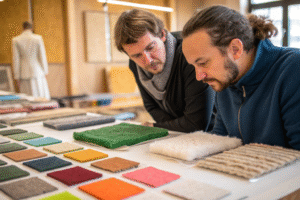
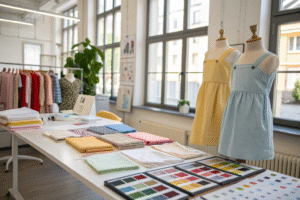
Brand identity in kidswear is shaped by design originality and the ability to bring creative ideas to life quickly. Vertical manufacturing enables seamless communication between designers, pattern makers, and production teams.

How does vertical manufacturing help with custom orders?
When all departments are under one roof, adjustments to patterns, fabrics, or colors can be made instantly without external delays. Studies by Just-Style show that vertically integrated factories deliver custom designs up to 25% faster.
Why is design control important for kidswear brands?
Children’s clothing buyers often seek unique prints, trims, or silhouettes to stand out. With vertical manufacturing, brands can experiment with short runs and test collections before committing to large-scale orders. This flexibility is crucial for competing in the dynamic children’s fashion market.
Conclusion
Vertical manufacturing for kidswear is more than just an operational choice—it’s a strategic advantage. It brings together quality control, speed, cost efficiency, and brand customization into one unified process. For U.S. and European buyers aiming for mid-to-high-end children’s apparel markets, this model reduces risks, enhances product appeal, and keeps you competitive.
If you are ready to work with a trusted partner that offers fully integrated vertical manufacturing for kidswear, contact our Business Director Elaine at elaine@fumaoclothing.com. At Shanghai Fumao, we turn your designs into market-ready collections with precision, speed, and care.