
More and more parents want sustainable clothing for their children—but they don’t always know where those garments come from. As a sourcing professional, you must bridge the gap between environmentally responsible production and market-ready products that meet retail expectations.
To source sustainable children’s clothing, focus on certified eco-friendly materials, ethical factories, transparent documentation, and long-term supplier relationships. These elements not only help reduce environmental impact but also add value to your brand in a crowded kidswear market.
In this article, I’ll walk you through the key considerations and actionable steps for sourcing baby and children’s garments that are both sustainable and scalable—from material selection to vetting compliant suppliers.
Which Fabrics Are Best for Sustainable Kidswear?
Material choice is the foundation of sustainable apparel. For children’s clothing, it must be both eco-conscious and gentle on sensitive skin.
The most recommended fabrics include organic cotton, bamboo, Tencel, and rPET blends. These materials offer biodegradability, durability, and lower water or chemical use during production.

Why is organic cotton the top choice?
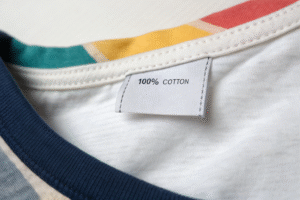
Organic cotton is grown without harmful pesticides and uses less water than conventional cotton. It’s also naturally soft—making it ideal for newborn and toddler clothing. Always look for GOTS certification to verify authenticity.
Organic cotton garments also biodegrade faster, leaving fewer microplastics behind. For sustainability-focused brands, this fabric becomes both a sales and mission advantage.
Are recycled materials safe for kids?
Yes, if sourced responsibly. rPET fabrics (recycled polyester from plastic bottles) are commonly used in outerwear or performance garments for kids. Make sure they’re GRS-certified and tested for chemical safety in children’s products. Recycled cotton blends can also be used in playwear and accessories.
What Certifications Should You Require from Suppliers?
Certifications ensure that your sustainability claims aren’t just marketing—they’re backed by real audits and science. Always request third-party verified certificates.
Essential certifications for sustainable children’s garments include GOTS, OEKO-TEX Standard 100, BSCI, GRS, and SA8000.

What is the difference between GOTS and OEKO-TEX?
GOTS covers the entire supply chain—from organic farming to dyeing and packaging. OEKO-TEX focuses solely on the safety of the end product, ensuring it’s free from harmful substances. For children’s garments, both are critical.
If your supplier holds both, it’s a strong indicator they prioritize sustainability and child safety equally.
How do you verify a certificate’s validity?
You can check certificate numbers online through each organization’s portal. For instance, GOTS certification lookup lets you verify a supplier’s scope and expiry date. Never rely on PDF screenshots alone—cross-checking avoids sourcing from fake compliance claims.
How Do You Vet Ethical and Eco-Friendly Factories?
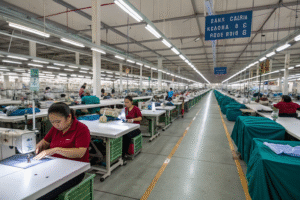
Sustainability isn’t just about fabric. It’s also about how the clothes are made. Social responsibility and waste reduction must be part of your vetting checklist.
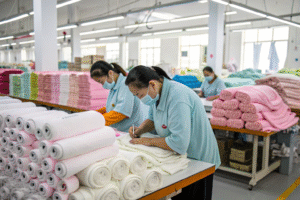
An ethical, sustainable factory should meet labor safety standards, use responsible dyeing processes, minimize textile waste, and allow transparent audits.

What audits matter for factory ethics?
Look for factories with BSCI, SEDEX, or SA8000 certifications. These audits confirm fair wages, legal working hours, and safe environments.
You can also request ESG (Environmental, Social, Governance) reports if the factory has sustainability programs like solar use, water recycling, or closed-loop dye systems. Transparent suppliers will share these readily.
Should you visit the factory?
If possible, yes. A site visit helps you verify claims—like whether GOTS processes are actually followed. For overseas sourcing, request a virtual factory tour or live video audits with third-party agents. These reduce risk when you can’t fly out yourself.
What Packaging and Logistics Options Support Sustainability?
Even the best babywear loses its green value if shipped in plastic-filled packaging or via fragmented air freight. Sustainability must extend to how you deliver.
Use eco-friendly packaging (like compostable mailers or recycled cardboard) and opt for DDP consolidated shipping whenever possible.

What are sustainable packaging options?
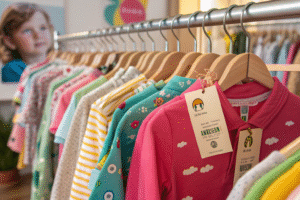
Switch from traditional PE polybags to PLA compostable bags or recycled kraft paper wraps. Use soy ink hangtags and replace plastic clips with jute or paper fasteners.
Clear communication with your supplier about packaging specs reduces overuse. Some platforms also offer custom sustainable packaging at low MOQs.
How can DDP shipping reduce carbon emissions?
With Delivered Duty Paid (DDP) logistics, suppliers manage everything—from export customs to door delivery. When consolidated in sea freight, it significantly lowers emissions per unit compared to air or split shipments.
Many brands now request carbon-neutral freight partners or offset programs to boost their sustainability report cards.
Conclusion
Sourcing sustainable children’s clothing isn’t about perfection—it’s about progress. From choosing certified fabrics and vetting ethical factories to using eco-friendly packaging and low-impact logistics, each step brings your brand closer to responsible production.
At Fumao Clothing, we help clients worldwide develop scalable sustainable kidswear collections without compromising quality or design. Whether you’re launching a new eco line or greening an existing one, we’ll walk the path with you—from thread to freight.