
Reducing production costs doesn’t mean compromising quality. Especially in children’s wear—where safety and softness are key—smart brands find ways to save through process, sourcing, and design optimization.
To reduce production costs for kids wear, brands should optimize fabric usage, consolidate trims, leverage batch production, choose cost-efficient designs, and work closely with vertically integrated factories.
In this article, I’ll share real strategies we use at Fumao Clothing to help global clients—particularly those in the U.S. and EU—control unit cost without sacrificing product quality, compliance, or speed.
How Can Fabric Optimization Reduce Kidswear Cost Per Unit?
Fabric typically accounts for 50–70% of the total garment cost in kidswear. That means improving fabric usage—even by a few percent—can deliver significant savings at scale.
Brands can reduce kidswear unit cost by optimizing fabric yield using CAD marker systems, fabric width matching, and bulk dyeing efficiencies.

What Is a Fabric Marker and Why Does It Matter?
A fabric marker is a digital layout of all garment pieces arranged tightly to minimize fabric waste. Using CAD software like Gerber AccuMark or Lectra Modaris, we reduce wastage by:
- Nesting small pattern pieces into gaps
- Aligning grain direction for efficiency
- Minimizing leftover “dead zones”
Ask your supplier if they optimize markers in-house or outsource. At Fumao, we generate our own markers based on the fabric width and batch size.
Should You Standardize Fabric Width or GSM?
Yes. Many brands unknowingly choose different widths or weights across similar styles, leading to excess scrap. Use standard width fabrics (58”–60”) where possible and consider lightweight fabrics like single jersey or interlock for cost-effective everyday wear.
Fabric databases like Texbase or SwatchOn can help buyers compare textile options by GSM and price.
What Role Does Trim and Design Simplification Play?
Every zipper, patch, label, or decorative element adds cost—especially for children’s wear where trims must pass strict safety tests.
Smart design can reduce trims without affecting aesthetics—saving cost on materials, sewing labor, and compliance.

Which Design Elements Drive Costs in Kidswear?
Here are typical cost drivers:
- Metal snaps (require testing and secure attachment)
- Embroidery or appliqués
- Multi-color screen prints
- Decorative elastics or bows
Instead, opt for:
- Heat transfer labels (vs. woven)
- Printed graphics (vs. sewn)
- Envelope necklines (no snaps needed)
Fashion tech firms like CLO 3D help simulate these design changes to preview their impact on production.
Can Standardizing Styles Across Collections Help?
Absolutely. Use shared base patterns for T-shirts, leggings, rompers, and only change colors or prints seasonally. This:
- Reduces sampling and grading costs
- Streamlines production lines
- Allows bulk ordering of shared trims
Brands like Primary.com use this tactic to keep SKUs simple but fresh.
Can MOQ Consolidation and Smart Planning Lower Prices?
Low MOQs often result in higher unit costs due to sampling, fabric wastage, and inefficient line planning. By consolidating quantities and batch scheduling, buyers can reduce costs without increasing risk.
Order grouping, forecast-based production planning, and MOQ pooling with other styles can dramatically lower cost per unit.

What’s the Benefit of Consolidating Fabric Across Styles?
Say you produce:
- 200pcs of a romper
- 300pcs of a T-shirt
- 500pcs of a baby gown
If all use the same cotton jersey, you can:
- Cut them together
- Dye fabric in bulk
- Order trims in higher volume (lower price/pc)
This tactic lowers material and labor costs. At our factory, we suggest this during the pre-order planning stage.
How Can Pre-Booking Fabric and Production Slots Help?
Instead of waiting for every style to finalize, pre-book:
- Greige (undyed) fabric
- Print screens or color dyes
- A future production window
This ensures better pricing, especially during peak seasons (Feb–May and Sep–Nov). Many brands now use production calendars like MakerSights to forecast drops in advance.
How Does Working with Vertical Factories Save Hidden Costs?
Working with separate suppliers for fabric, trims, sewing, and packaging creates coordination delays, miscommunication, and redundant logistics fees.
A vertical kidswear factory reduces cost through in-house processes, faster decision-making, and lower overhead per garment.

What Are Hidden Costs in Multi-Vendor Supply Chains?
Here are costs that brands often overlook:
- Freight between different factories
- Wastage during handoffs
- Time delays = air shipping (vs. sea)
- Misaligned fabric QC and garment specs
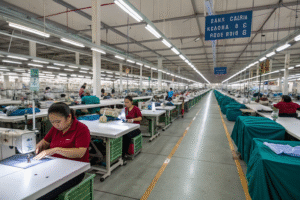
Vertical integration eliminates many of these. At Fumao Clothing, our in-house knitting and sewing team reduces average lead time by 7–10 days.
Learn more from Apparel Resources and Just-Style on how integrated production improves apparel cost efficiency.
How to Find the Right Vertically Integrated Partner?
Ask:
- Do you own or operate your fabric mill?
- Can you show real-time order status?
- Is packaging done in-house?
- Can you consolidate shipping?
Platforms like Foursource or Common Objective can help filter suppliers by integration level.
Conclusion
In children’s wear, quality must never be sacrificed—but production costs can be controlled smartly through a mix of design, sourcing, and factory strategy. Here’s a quick recap:
- Optimize fabric usage with digital markers and standardized GSMs
- Simplify design elements like trims and labeling
- Plan bulk runs and group fabrics across SKUs
- Work with vertically integrated partners for long-term savings
At Fumao Clothing, we collaborate with brand owners to redesign SKUs for cost-efficiency, consolidate materials, and plan batches that reduce unit price by up to 15–20% without compromising quality or delivery time.
If you’re growing a kidswear brand and want to scale profitably, it’s time to reduce cost the strategic way—not the cheap way.