
In recent years, the rise of AI design tools has reshaped how we create clothing, graphics, packaging—even entire collections. For some, this shift sparks excitement. For others, it raises concerns: are machines taking over what used to be human creativity?
AI design tools are not replacing human designers—they’re augmenting them. From speeding up repetitive tasks to generating design suggestions based on data, AI helps designers work smarter. But the soul of design—vision, emotion, cultural relevance—still belongs to humans.
This article unpacks how AI tools are changing our industry, why human creativity remains irreplaceable, and how forward-thinking brands can harness both to lead in 2025 and beyond.
How are AI tools being used in fashion design today?
AI has taken a strong foothold in the fashion world, especially in streamlining product development cycles. From fast prototyping to design trend analysis, AI tools like Adobe Firefly and CLO3D are becoming standard in many design departments.
Today, AI is helping designers automate tedious tasks and unlock faster workflows. For example, algorithms can generate fabric print variations in seconds or recommend trim styles based on buyer behavior data. Designers can now go from concept to visualization with unprecedented speed.

What design processes are AI tools speeding up?
AI is especially effective at handling repetitive or data-heavy tasks. Generative tools like RunwayML can create visual mockups instantly, while AI-based grading tools auto-generate size specs across a range. For factories like ours producing premium children’s wear, that means faster sample approvals and fewer revisions.
This matters in fast-paced markets like the US, where seasons shift quickly and styles must hit shelves at the right moment. With AI, designers can test silhouettes digitally before any fabric is cut. Our clients love how it compresses development timelines.
Can AI generate original design ideas?
Yes—but only to a point. AI tools can remix existing ideas, identify patterns, and even suggest styles based on market data. For instance, Heuritech uses image recognition and trend forecasting to suggest styles that are rising in popularity.
But these tools lack intuition. They can’t feel what a customer wants next season. That leap—from data to desirability—is still uniquely human. We use AI to guide decisions, but our lead designers make the final call.
Will AI impact fashion jobs in the long run?
AI won’t eliminate designers—but it will change their roles. The need for visual artists and garment engineers will remain. What’s evolving is how they collaborate with tech, data, and automation systems.
AI will shift design roles, not erase them. Just like CAD tools changed the industry decades ago, AI is a new tool in the creative toolbox. Designers who adapt will thrive in hybrid roles combining aesthetics with digital fluency.

What new roles are emerging due to AI integration?
We’re already seeing new job titles: AI-enhanced designer, digital fashion technician, prompt engineer. These professionals blend design instincts with tool mastery—knowing how to get the best out of systems like Daz 3D or Midjourney.
At Fumao Clothing, our team is training in CLO3D to integrate AI-generated avatars for children’s wear fitting. This lets us visualize how garments move on a toddler before sampling. It’s a game changer in reducing waste and optimizing fit.
Will traditional designers lose their value?
Absolutely not. Clients, especially in mid-to-high-end markets, still want the human touch. Understanding color psychology, cultural symbolism, and emotional resonance is what makes a brand special. AI can’t replicate that.
Even platforms like Designs.ai admit that their goal isn’t to replace humans—but to support them. Designers who learn to harness AI will gain a competitive edge, not lose relevance.
What are the current limitations of AI in design?
AI lacks originality and emotional depth. It learns from past data—great for trends, poor for disruption. That’s why AI-generated fashion can feel bland or derivative if left unchecked.
AI struggles with storytelling, cultural nuance, and originality. It can help with ideation but falls short in translating deep, human-centric narratives into tangible products.

Why can’t AI fully replace human intuition?
Design isn’t just about visual appeal. It’s about values, identity, timing. A toddler hoodie with eco-friendly fabric and soft lining speaks to safety and sustainability—not just trend. AI doesn’t understand that nuance. Humans do.
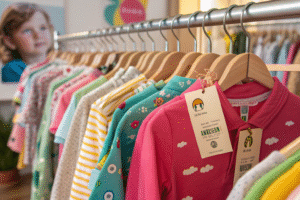
When we designed a limited-edition organic babywear line for a US client, AI helped us generate fast variations. But it was our team that chose warm beige tones to evoke calmness and reinforced seams for active toddlers. Those are design choices rooted in empathy.
How does AI fall short on cultural sensitivity?
One of the biggest risks in using AI is bias. Tools like Deep Dream Generator may lack understanding of body types, racial diversity, or social norms unless explicitly trained.
For brands targeting the American market, being tone-deaf to culture is costly. We use AI with care and human review. It’s a collaboration, not blind trust.
How can fashion businesses benefit from AI-human synergy?
The sweet spot isn’t human vs AI. It’s human + AI. When balanced well, this collaboration produces smarter design decisions, faster development, and reduced waste.
Brands that combine AI tools with skilled human teams are building the most agile, efficient supply chains. This is especially powerful for mid-market labels needing speed and flexibility without compromising quality.

How are manufacturers like Fumao Clothing applying AI?
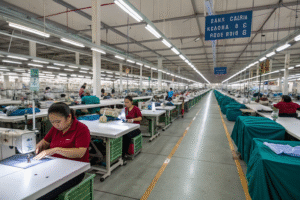
We integrate AI into several production stages: digital sampling with CLO3D, AI-assisted trend mapping for seasonal lines, and smart logistics prediction. These tools help our buyers plan better—and save more.
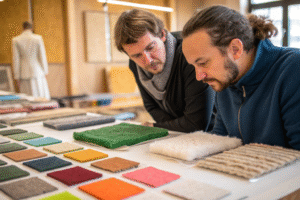
For instance, we helped a US buyer test 6 seasonal colorways virtually. They chose the top two to produce, avoiding overstock. That’s AI making fashion more sustainable and profitable.
What should brands do to adopt AI responsibly?
Start small. Use AI for pattern exploration or sample reduction. Train your team. More importantly, keep humans in charge of final decisions. Brands like Tommy Hilfiger and Stitch Fix have paved the way, showing that ethical AI can boost creativity and profitability.
We guide our clients through this too. Whether it’s AI-rendered sketches or human-reviewed prototypes, we provide clarity and confidence through each step.
Conclusion
AI design tools are not here to replace us—they’re here to amplify our capabilities. In the hands of skilled humans, these tools offer speed, consistency, and insight that used to be unimaginable. But the spark of creativity, cultural awareness, and emotional intelligence will always remain human.
If you’re looking to elevate your children’s clothing brand with the power of AI-enhanced yet human-centered manufacturing, let’s collaborate. At Shanghai Fumao, we blend intelligent technology with real craftsmanship to deliver premium results. Contact our Business Director Elaine at elaine@fumaoclothing.com to start your custom project today.