
As a clothing manufacturer working with global buyers, one of the biggest threats we’ve seen to trust in the industry is certification fraud. Fake BSCI audit reports, expired GOTS certificates, or self-declared OEKO-TEX claims can damage reputations, trigger customs holds, and ruin entire sourcing partnerships.
To prevent certification fraud in garment sourcing, you must adopt a multilayered approach involving direct verification with certifying bodies, digital validation tools, trusted third-party auditors, and supplier relationship management techniques.
In this article, I’ll walk you through practical and effective steps—based on our own experience in the children’s wear export industry—to help you, as a buyer, avoid falling into these traps. Whether you’re sourcing from China, India, or elsewhere, this guide will arm you with the tools to protect your brand and your customers.
What Are the Most Common Fake Certifications in Apparel?
The fashion industry has grown heavily reliant on third-party certification schemes. But this also creates opportunities for deceptive practices. Some suppliers knowingly send outdated, forged, or photoshopped documents to impress buyers or win contracts.
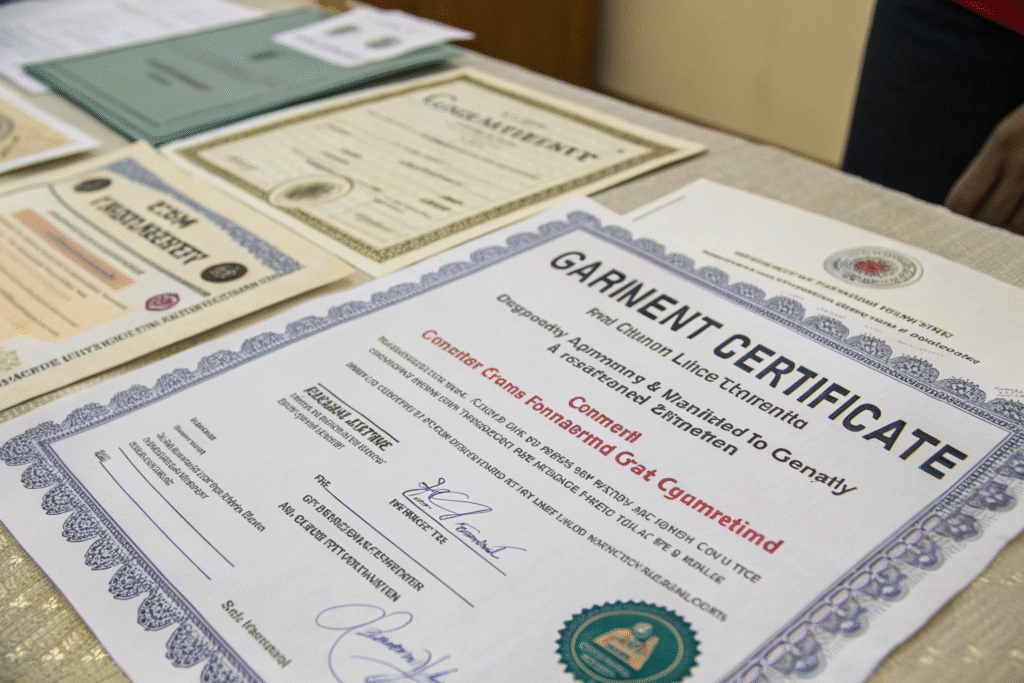
The most commonly falsified certifications in garment sourcing include BSCI, GOTS, OEKO-TEX, WRAP, and Sedex SMETA audit reports. These cover everything from ethical labor practices to organic content claims and chemical safety in fabrics.
Why Are GOTS and OEKO-TEX Certificates Often Misused?
Global Organic Textile Standard (GOTS) and OEKO-TEX Standard 100 are highly sought after, especially for children’s and baby clothing. However, many suppliers only have fabric-level certification, not full-factory or product-level approval. Still, they pass these as comprehensive claims.
Always verify through the official GOTS database and OEKO-TEX label check before accepting the documents.
How Do BSCI and Sedex Audit Reports Get Manipulated?
Buyers may receive clean-looking audit PDFs with falsified names, doctored ratings, or even made-up audit firms. The true BSCI reports must be validated on the amfori BSCI platform and SMETA audits can be verified via Sedex.
If the supplier refuses to share a Sedex member number or BSCI reference ID, that’s a red flag.
How to Verify Garment Certificates with Official Databases?
A proactive verification process can shield your business from bad actors in the supply chain. Fortunately, most reputable certifying organizations now provide public lookup portals.
To verify certificates, always request certificate numbers, issuing body names, and audit dates, then cross-check directly on the certifying organization’s platform.
Where Can You Validate OEKO-TEX and GOTS Certificates?
- For GOTS, go to global-standard.org database and input the certificate number.
- For OEKO-TEX, use the Label Check and match it to the supplier name.
Always look for the scope, validity, and certified facility name. Some fraudulent suppliers use genuine but unrelated certificates from other factories.
How to Confirm BSCI and WRAP Audits Are Real?
- Ask for the amfori BSCI unique ID and check on amfori.org.
- For WRAP, go to the WRAP certified facility list and check if the factory name appears.
If you’re sourcing from China, always match the Chinese company name on the certificate with the legal registration name listed on Tianyancha or Qichacha.
What Tools Can Help Detect Forged Documents?
Beyond just looking at document aesthetics, digital tools and platforms are now available to flag inconsistencies and automate verification.
You can use reverse image search, metadata extraction, and blockchain-enabled supply chain tools to verify the authenticity of certificates and track document integrity.
Can Image Metadata Reveal Fraud in Scanned Certificates?
Yes. Tools like FotoForensics or ExifTool help inspect if images or PDFs have been altered. Pay attention to:
- Unnatural white space
- Date discrepancies in metadata
- Overwritten text layers
Compare documents from the same supplier over time. A new logo or different file structure may indicate tampering.
Are Blockchain Tools Useful for Certification Validation?
Emerging platforms like TextileGenesis and TrusTrace now help brands track certified material flows and validate compliance via blockchain. This is especially useful for brands sourcing sustainable or traceable fibers like organic cotton or rPET.
Although not widely adopted in small factories yet, these tools are gaining ground among larger supply chains in the US and EU.
How to Build a Fraud-Proof Sourcing System?
Fraud prevention in garment sourcing isn’t a one-time activity. It requires creating a system that weeds out unreliable vendors and strengthens trust with verified partners.
Build a multi-tier verification system involving internal SOPs, digital tools, and on-site audits to minimize fraud risks.

What Should Your Supplier Onboarding Process Include?
Set up a clear Supplier Qualification Protocol:
- Legal business license verification via Tianyancha
- Certification verification using official bodies
- 3 references from past clients (can be validated via LinkedIn)
- Sample audit report cross-checks
Also, draft contract clauses that impose penalties for submitting fraudulent documents.
Should You Conduct Third-Party On-Site Audits?
Yes. Nothing beats physically verifying the factory’s operations. Use certified inspection agencies like:
A typical third-party audit will validate social compliance, quality assurance protocols, and physical certificate displays on-site.
Conclusion
In today’s fast-moving apparel industry, certification fraud is a serious threat to sourcing integrity. But it’s also avoidable with the right systems in place.
By directly verifying through certifying body databases, using digital tools like blockchain or forensic scanners, and working with trusted auditors, you can ensure your sourcing process is compliant, ethical, and risk-resistant. At Fumao Clothing, we take pride in transparency and proactively share all valid, current certifications with our clients.
Buyers like Ron, who value quality with integrity, don’t just want the lowest price—they want peace of mind. And in 2025, that means working only with suppliers who can prove what they claim.