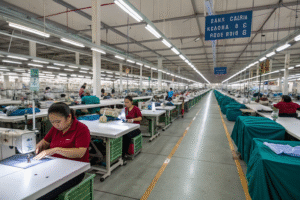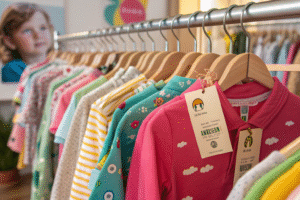
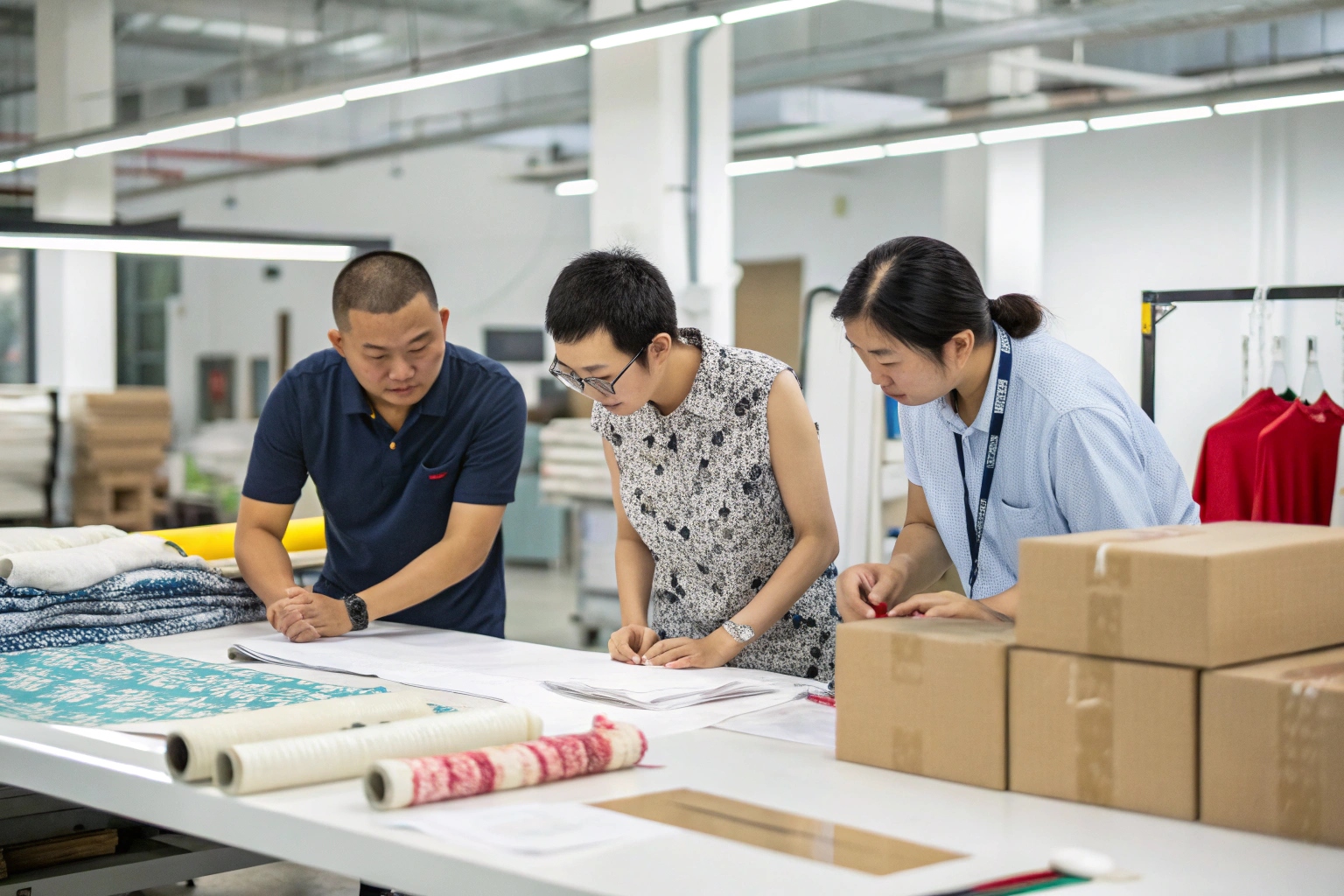
Capsule collections need more than great ideas—they need execution. That’s where your factory becomes your greatest asset, or your biggest roadblock.
The right garment factory can guide you through capsule development with end-to-end support—from concept sketches to shelf-ready delivery.
In my experience, the best capsule launches happen when the factory acts like a partner, not just a supplier.
Factory Support from Concept to Final Production?
Designing capsules is only half the challenge. Bringing them to life needs structure and factory coordination.
A professional garment factory provides full-cycle support—from sample creation and sourcing to quality control and logistics—to help you build capsule collections quickly and effectively.
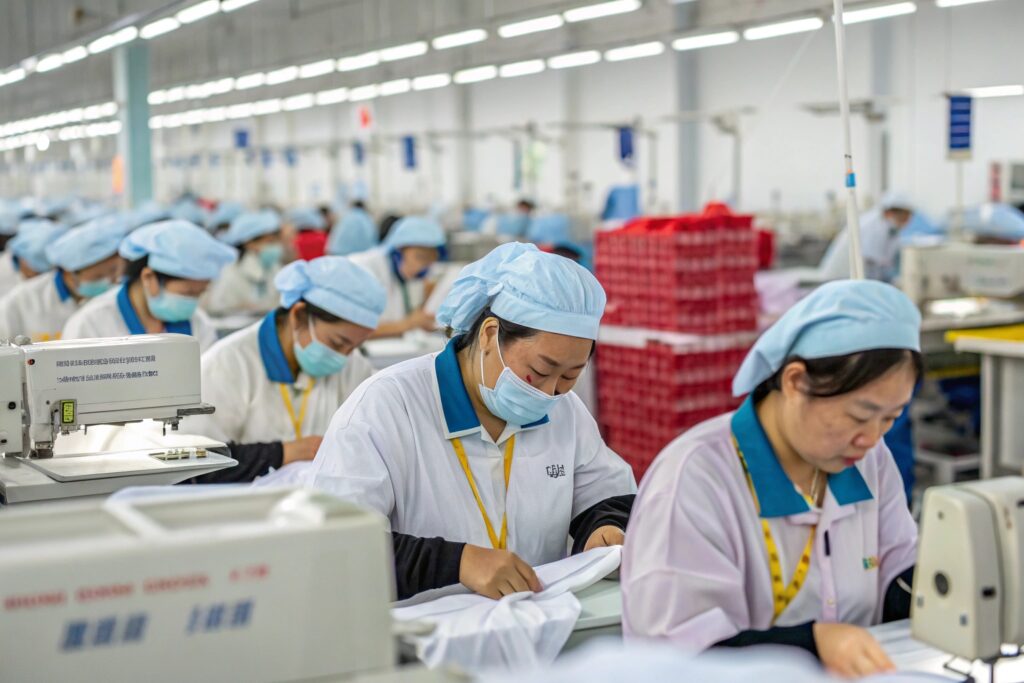
What stages of capsule development should your factory help with?
At Fumao Clothing, we support every step of the capsule lifecycle:
- Concept Alignment – We review your theme, target audience, and season.
- Material Sourcing – We propose fabrics, colors, and finishes aligned with your budget and timeline.
- Sampling – We create digital mockups, physical samples, and conduct early-fit testing.
- Pattern Making and Grading – We ensure your styles work across age groups and sizes.
- Batch Planning – We align on MOQ, style count, and production order.
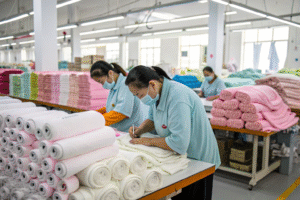
- Production and QC – We monitor quality throughout—not just at the end.
- Packing and Shipping – We pack according to your brand requirements and ship DDP if needed.
Capsule brands benefit from having one partner handle this whole process. It cuts down on delays, miscommunication, and unexpected costs.
Why is this type of factory involvement essential for capsule success?
Capsules are short-cycle, fast-moving projects. They don’t allow room for back-and-forth over weeks. Having a responsive, experienced factory means your capsule hits the market while the trend is still hot.
And because many capsule buyers work with small MOQs, they can’t afford expensive mistakes or waste. A hands-on factory like ours ensures each decision is built on efficiency and real-world production knowledge—not theory.
How Manufacturers Help Refine Capsule Designs?
Even the best concepts need technical tweaks. That’s where your factory’s experience makes a difference.
Manufacturers help refine capsule designs by offering feedback on construction, fabric compatibility, and production feasibility.
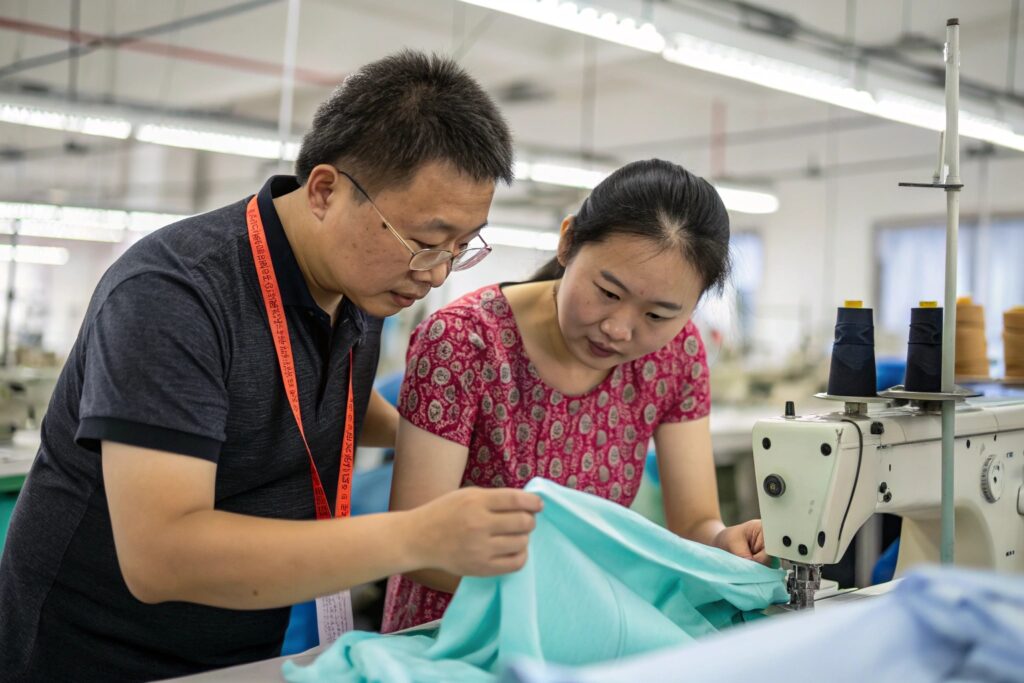
What kind of design input should you expect from your garment factory?
Here’s what we often help our buyers improve:
- Fit Adjustments – Especially for kidswear, we refine ease, sleeve openings, and elastic placements.
- Fabric Compatibility – We flag when certain designs won’t work well with your chosen material.
- Cost-Impact Features – We suggest simplified stitching or trim options to control price.
- Production Feasibility – We check if complex designs can be executed at scale, on time.
For instance, one buyer sent us a 5-piece capsule with three styles using oversized pockets and contrast stitching. We advised trimming those features down on two SKUs to stay within budget and production lead time. The capsule still looked great—but we saved them 18% in cost and 6 days of production.
How does this factory feedback improve outcomes for first-time capsule buyers?
For new capsule buyers, factory feedback provides a second layer of product development expertise. They may not have in-house patternmakers or technical designers. We fill that gap.
At Fumao, we even provide 3D virtual samples before cutting fabric. This lets buyers adjust neckline depth, hemline curves, or sleeve length without spending on physical samples.
Ultimately, manufacturer input keeps your capsule grounded in what’s doable—and profitable—without compromising on style.
Technical Expertise Your Factory Should Provide?
Factories aren’t just for stitching. They’re your design lab, quality team, and logistics arm rolled into one.
Your factory should provide technical guidance on sizing, grading, pattern cutting, sewing techniques, compliance, and material testing.
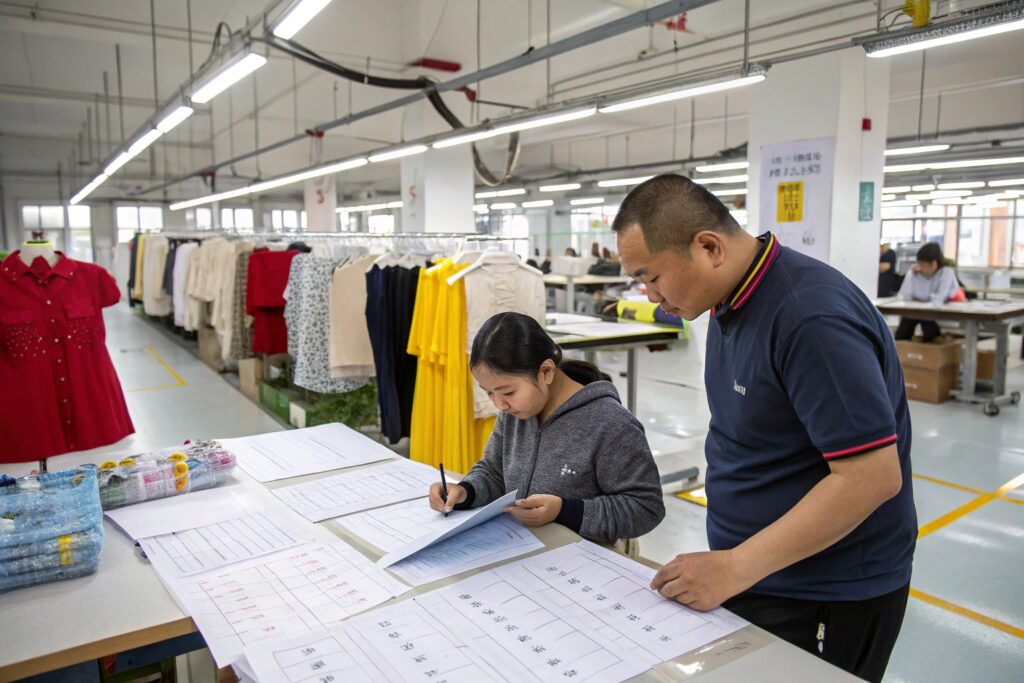
What technical roles should a full-service garment factory cover?
Here’s the technical support you should expect:
| Function | Description |
|---|---|
| Pattern Development | Translate your sketches into technical patterns with grading across age sizes |
| Material Testing | Evaluate shrinkage, pilling, colorfastness |
| Construction Methodology | Choose stitching types that suit garment usage and speed |
| Size Grading | Scale your garment for 2T–10Y or similar kidswear ranges |
| Regulatory Compliance | Ensure safety and labeling standards are met (e.g., CPSIA for U.S.) |
We once helped a brand adjust their capsule after lab results flagged a fabric with poor colorfastness. They switched to an in-stock fabric we recommended—and the restock sold out with zero complaints.
Why is this technical expertise crucial for scaling a capsule?
Technical errors don’t scale—they multiply. A fit issue on a 200-piece test run might be manageable. On a 2,000-piece reorder? It’s a disaster.
Good factories prevent these issues at the test stage. That’s why we run a mini audit on every capsule sample we produce: testing fit, stress points, washing behavior, and even toddler-friendliness (e.g., no sharp trims).
Technical knowledge is the foundation that supports quick scaling, consistent quality, and brand credibility.
Collaborating on Timelines, MOQ, and Cost Efficiency?
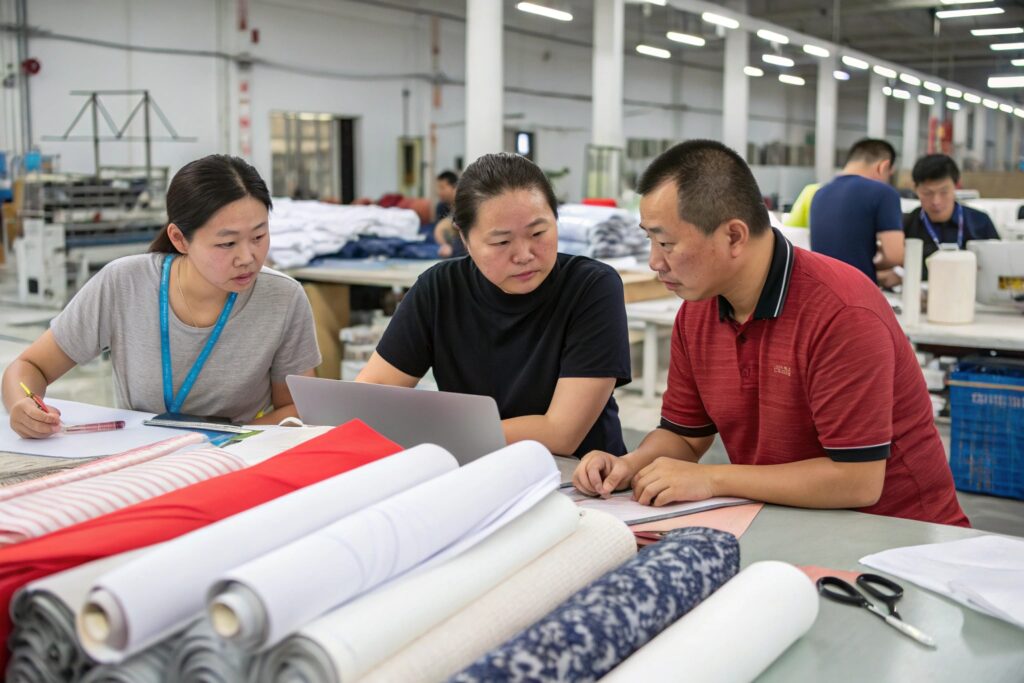
Every capsule brand wants speed, flexibility, and margin. But achieving that means open collaboration with your factory.
Your factory should help you balance production timelines, low MOQs, and cost efficiency based on real capabilities—not wishful thinking.
How do you align production timelines with capsule goals?
You need to work backward from your capsule launch date.
- Set your launch goal (e.g., Fall break, July 1)
- Deduct shipping time (DDP: 15–22 days or air: 5–10 days)
- Deduct production time (20–30 days)
- Deduct sampling and approvals (7–14 days)
We call this the Capsule Countdown Calendar. For instance:
| Task | Timeline |
|---|---|
| Final design submission | May 1 |
| Sample approval | May 10 |
| Production start | May 12 |
| Shipping | June 10 |
| Capsule Launch | July 1 |
At Fumao, we guide buyers through this calendar based on their region, shipping method, and batch size.
How do MOQs and cost efficiency relate—and how can factories help find the sweet spot?
Here’s the truth: lower MOQs increase per-unit cost. But smart batching and planning can reduce the difference.
We help clients:
- Use shared materials across styles to cut sourcing time and waste
- Group similar styles into modular production runs
- Offset higher per-unit costs with simplified trims or packaging
- Schedule rolling restocks instead of overproducing upfront
Here’s how MOQ affects cost in a typical capsule:
| Batch Size | Per-Unit Cost | Lead Time | Efficiency |
|---|---|---|---|
| 200 pcs | High | Fast (10–15 days) | High flexibility |
| 500 pcs | Medium | Balanced (15–25 days) | Balanced |
| 1000+ pcs | Low | Slower (25–35 days) | Best cost per unit |
Our goal is to find the MOQ that meets your financial and marketing strategy—without risking excess stock or missing a launch window.
Conclusion
The right factory does more than manufacture—they collaborate, optimize, and de-risk every step of your capsule journey. At Fumao Clothing, that’s exactly what we do—every capsule, every client, every time.