
What are Best Baby Clothing Size Charts?
Finding the right baby clothing size chart is one of the most important steps for any brand owner, distributor, or buyer in the children’s wear industry. If your goal is to deliver perfectly fitting baby clothes to your customers, you need size charts that go beyond a simple “3-6 months” tag. Inaccurate sizing leads to returns, bad reviews, and damaged brand reputation.
The best baby clothing size charts combine international measurement standards, practical fit guidelines, and brand-specific adjustments to ensure the perfect balance of comfort, safety, and style for every stage of a baby’s growth.
As a manufacturer who serves top US and European children’s wear brands, I know firsthand that the right sizing information can save you thousands in lost sales and customer complaints. In this guide, I’ll share how to identify the best size charts, which global resources to trust, and how we integrate them into our production process at Fumao Clothing.
US and EU Baby Clothing Size Differences
For buyers like Ron in the United States, understanding how US and EU sizing differ is essential when importing from manufacturers in China. A common pitfall is assuming that a “6 months” label means the same everywhere.
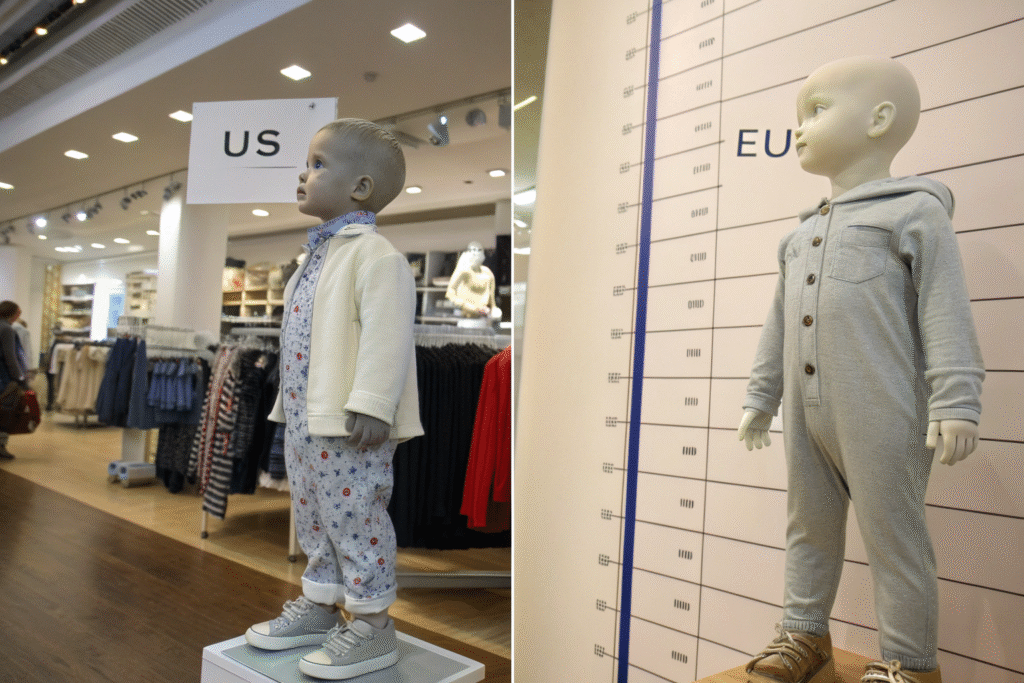
While US size charts are generally age-based (Newborn, 0–3M, 3–6M, etc.), European charts are based on the baby’s height in centimeters. For example, a European size 68 usually fits a baby 4–6 months old, measuring around 68 cm in height. Without converting these correctly, your shipment may arrive and fail to match your customers’ expectations.
How do US age-based sizes work?
US brands often provide a range in months, such as “3–6M.” However, these ranges are based on average growth data and can vary by brand. According to The Bump, a Carter’s 3M fits babies up to 12.5 lbs, while another brand’s 3M might allow up to 14 lbs. This makes it critical to check the exact weight and height range on each brand’s official size chart.
Why does EU height-based sizing cause confusion?
EU sizing, such as 56, 62, 68, or 74, is straightforward for those who know the child’s height in centimeters, but American buyers often overlook this step. As Fashion Kids Magazine points out, knowing height ensures a more precise fit than guessing by age alone, which helps reduce returns.
Best Baby Clothing Size Charts for US Market
When sourcing for the US market, you want size charts that are clear, accurate, and compatible with your customer base. We often recommend a hybrid approach, combining US age-based labels with height and weight ranges for better clarity.
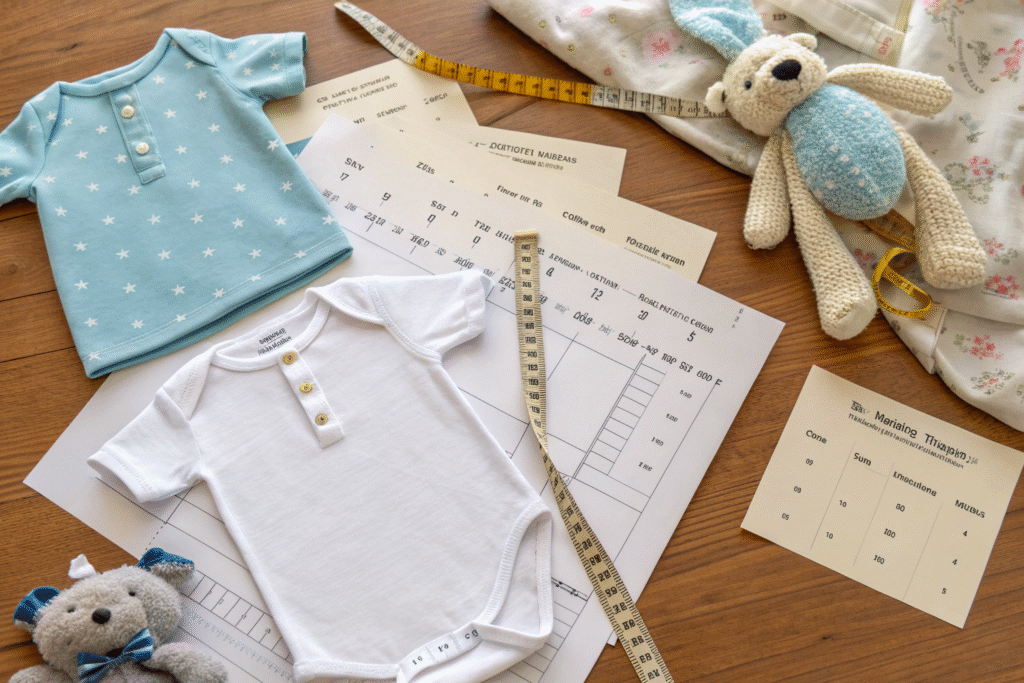
Two of the most trusted resources for American buyers are Care.com’s brand comparison charts and SizeChart.com’s standardized tables. Care.com lets you compare brands like Carter’s, Gerber, and Old Navy side-by-side, while SizeChart.com gives an easy-to-print reference covering Preemie to 24 months in both inches and centimeters.
Which brands provide the most reliable charts?
Brands like Carter’s and Gerber have decades of data behind their charts. Carter’s, for instance, lists clear height and weight ranges for each size, helping buyers avoid confusion. Gerber offers detailed charts with extra notes about shrinkage in cotton fabrics.
Should you always follow brand charts exactly?
Not always. Sometimes, even trusted brands’ size charts don’t match your target market’s growth patterns. For example, babies in warmer regions might wear lighter, looser clothes, requiring slight adjustments to sizing in your custom production orders.
How to Measure for Accurate Baby Clothing Sizing
One of the most overlooked steps in baby clothing production is accurate measurement during sample approval. This is where many shipment issues begin. Even the best size chart fails if the factory’s measurements aren’t consistent.
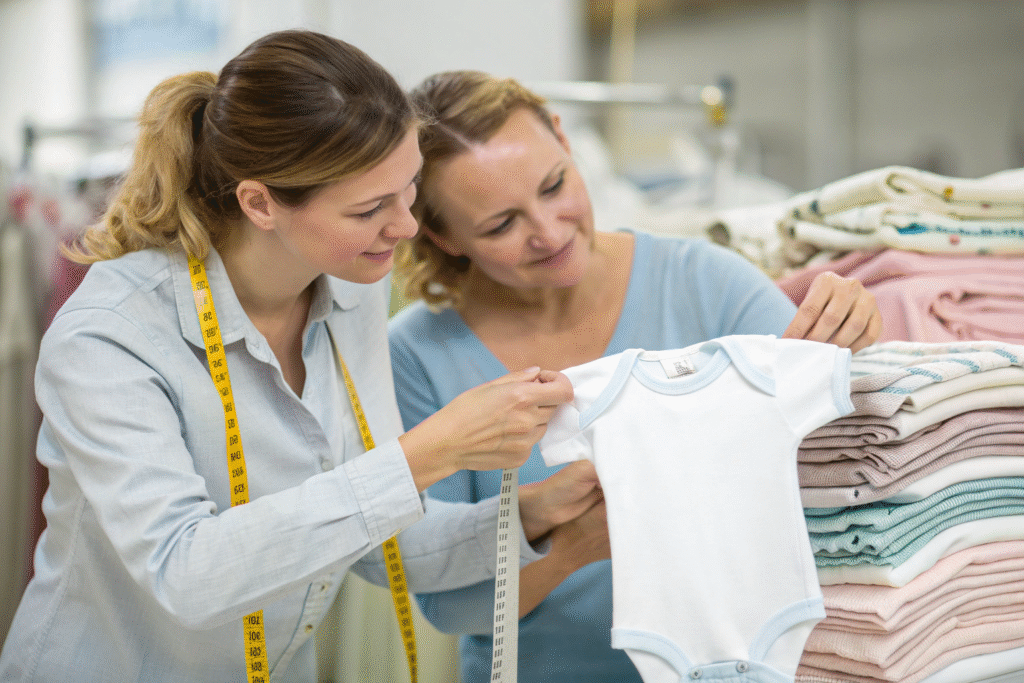
According to Parents.com, accurate sizing starts with three basic measurements: height, chest, and weight. For height, measure from the top of the head to the heel. For chest, measure around the fullest part, ensuring the tape is snug but not tight. Always compare to your chosen size chart before approving bulk production.
How do factories ensure consistency?
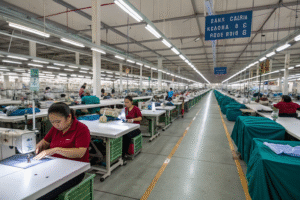
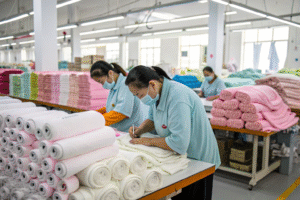
We use standardized templates for every garment category, plus digital measuring tools that store every measurement in our quality control database. This ensures each batch matches the approved sample size.
Why does fabric choice matter for sizing?
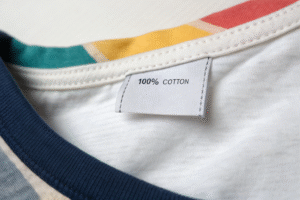
Cotton, for example, can shrink after washing. Verywell Family advises accounting for shrinkage by adding tolerance in the initial production stage. Synthetic blends, on the other hand, hold shape better but may fit differently.
Common Mistakes Buyers Make with Baby Clothing Sizes
Sizing errors can cost you money, customer trust, and even wholesale contracts. In my years working with international buyers, I’ve seen repeated patterns in sizing mistakes.
The most common issue is relying only on age labels without checking height and weight. Another is ignoring shrinkage potential in fabrics. Some buyers also fail to factor in regional growth differences, resulting in clothes that are too tight or too loose for their market.
How can buyers avoid these pitfalls?
Buyers should always cross-check brand charts with actual measurements from the factory. Tools like SizeChart.net make it easy to compare data before placing large orders.
Is it worth customizing size charts for your brand?
Absolutely. Custom size charts tailored to your target audience improve fit, reduce returns, and strengthen your brand’s reputation for quality. Many of our clients request personalized charts with both US and EU measurements to serve global customers.
Conclusion
Choosing the best baby clothing size chart means understanding measurement systems, comparing reliable sources, and implementing consistent quality control. The right chart will not only improve fit and comfort but will also save you from costly mistakes in production and distribution.
At Shanghai Fumao Clothing, we integrate precise sizing methods into every order to ensure your products fit perfectly straight out of the box. If you are ready to produce your own children’s wear line with professional sizing accuracy, contact our Business Director Elaine at elaine@fumaoclothing.com today.