
In today’s world of conscious consumers and increasingly complex global regulations, brand buyers like Ron—especially those selling baby and toddler clothing—need more than just competitive pricing. They need transparency. But how do you ensure trust in every step of your clothing supply chain? Many are turning to blockchain traceability systems.
Blockchain traceability helps verify the origin, movement, and compliance of every batch of clothing—from raw fabric to finished babywear. But does the return justify the investment for mid-sized and large apparel brands? Let’s break it down.
Whether you’re rebranding imported garments for the U.S. or building a proprietary baby clothing line, traceability has become a selling point. Here’s how it may impact your brand, pricing, logistics, and most importantly—your buyer’s trust.
What Is Blockchain Traceability in Apparel Supply Chains?
Blockchain is not just about cryptocurrencies—it’s changing how fashion brands manage supply chain integrity. Especially for sensitive categories like children’s clothing, blockchain offers a new level of transparency.
Blockchain traceability is a secure, digital system that records every supply chain event (from fiber sourcing to delivery) on a decentralized ledger, making the data tamper-proof and easily shareable.
How does blockchain traceability work?
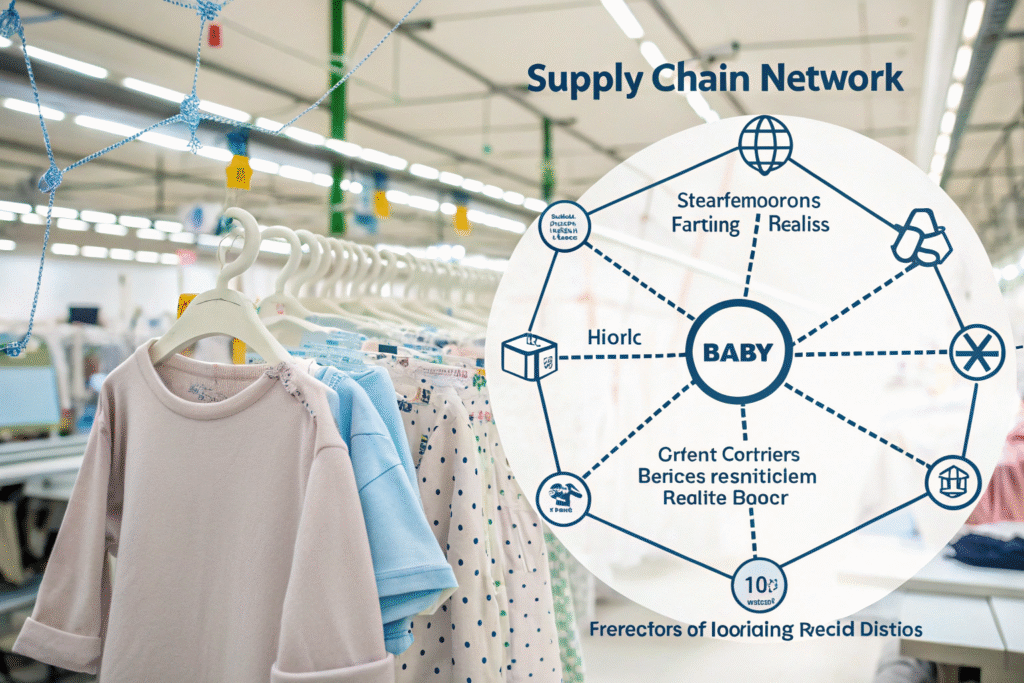
Each supply chain event—like cutting, dyeing, or quality inspection—is recorded on the blockchain. These records are time-stamped and cannot be altered. Systems like IBM Food Trust or Provenance allow manufacturers, logistics providers, and buyers to log data collaboratively.
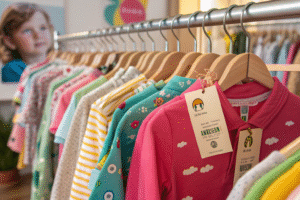
In the case of baby clothes, each production lot can include traceable records such as OEKO-TEX® certification, GOTS organic status, or fabric dye batch reports. This data becomes available through a QR code on the final product tag or digital dashboard.
What is the difference between traditional tracking and blockchain?
Traditional supply chain systems rely on centralized databases that are prone to error and manipulation. Blockchain, on the other hand, offers decentralized consensus, meaning all parties verify and lock in each event.
Buyers no longer have to "trust" a supplier’s word—they can see the data. In a world where certification fraud has become an issue, blockchain adds a layer of digital trust that spreadsheets and PDFs simply can’t provide.
What Are the Benefits for Children’s Clothing Brands?
As a manufacturer, I’ve worked with clients who started using blockchain not for tech vanity—but for practical business benefits. For Ron and similar buyers, it’s about protecting the brand while streamlining communication with overseas suppliers.
Blockchain traceability builds consumer trust, eases audits, prevents certificate fraud, and supports marketing with verifiable sustainability claims.
Can blockchain increase customer confidence?
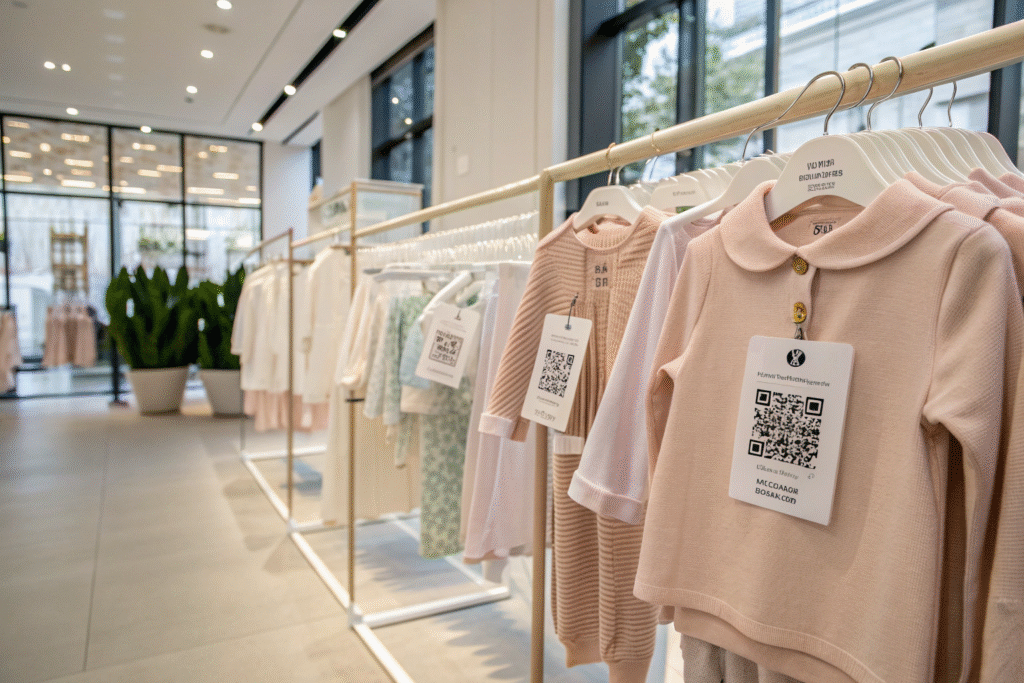
Yes—especially in the baby clothing segment, where parents are hyper-sensitive to product safety, fabric origin, and ethical production. Using platforms like Sourcemap, brands can offer a click-to-verify experience that shows the cotton was grown without harmful pesticides and processed in BSCI-audited facilities.
QR codes linking to real-time traceability platforms offer more than just tech appeal—they drive conversion. One of our U.S. clients saw a 17% increase in cart-to-purchase rate after adding blockchain-backed transparency badges.
How does it reduce compliance risks?
With blockchain, compliance documentation isn’t scattered across emails—it’s anchored to the product’s identity. During audits, certifications like GOTS, GRS, or CPSIA can be instantly verified.
This becomes even more crucial when dealing with retailers like Walmart or Target, who require detailed product sourcing data. Blockchain can simplify proof submission and avoid the chaos of last-minute document requests.
Is It Cost-Effective for Mid-Sized Apparel Brands?
Blockchain sounds expensive—but the cost depends on implementation. With the right partner, it can be surprisingly affordable and even improve profit margins by reducing manual compliance work.
For brands placing 5,000+ unit orders per style, the added blockchain cost per unit can be as low as $0.05—yet it can significantly boost perceived brand value and retail price justification.
What is the typical cost of blockchain implementation?
Initial setup with platforms like TextileGenesis™ or Haelixa ranges from $2,000–$10,000, depending on the number of traceable suppliers and locations. Ongoing costs depend on volume—typically $0.03–$0.10 per unit.
If you’re producing large orders in China, these costs can be offset by higher wholesale prices. A McKinsey report found that transparency-enabled brands were 35% more likely to charge premium pricing.
Can traceability reduce long-term operational costs?
Yes. It reduces document-chasing, miscommunication, and last-minute panic before customs inspections or brand audits. With blockchain, your supply chain visibility improves, and that means fewer shipment delays and misclassified goods.
One of our German clients avoided a €60,000 fine from customs by instantly proving fabric certification via blockchain during an inspection. That kind of prevention pays for itself fast.
What Should You Consider Before Adopting Blockchain?
Blockchain can deliver real value—but only if implemented strategically. Not every factory or material supplier is ready for it, so brands need to ask the right questions before jumping in.
Before adopting blockchain, ensure supply chain partners can participate, compliance data is digitized, and your brand has the resources to integrate and maintain the system.

Are your suppliers technically ready?
Blockchain works only if data from each supply chain step is uploaded consistently. Ask if your fabric mill or garment factory can interface with traceability platforms, or if they need middleware support.
If not, you may need a third-party integrator like Bext360 or Circularise. You’ll also need training to onboard your team and suppliers—especially in China, where we often help clients digitize production data before blockchain integration.
Will your brand use the data effectively?
Blockchain only adds value if you use it in marketing, compliance, and internal decision-making. It’s not a one-time cost—it’s a living dataset. Platforms like TrusTrace even offer dashboards for buyers to trace material origin by PO number.
Use the data in your product pages, trade show displays, and buyer presentations. It’s your trust asset—make sure it gets seen.
Conclusion
Blockchain traceability systems aren’t hype—they’re a powerful solution to real problems in the apparel supply chain, especially in high-trust markets like babywear. While not a must-have for every brand, for buyers like Ron who prioritize compliance, speed, and quality, it’s an investment that pays dividends in peace of mind and buyer loyalty.
At Shanghai Fumao, we’ve helped our clients integrate traceability systems that align with their supply chain capacity and brand story. Want to see how traceability can work for your baby clothing collection? Reach out to our Business Director Elaine at elaine@fumaoclothing.com. Let’s bring verified transparency to your next order.